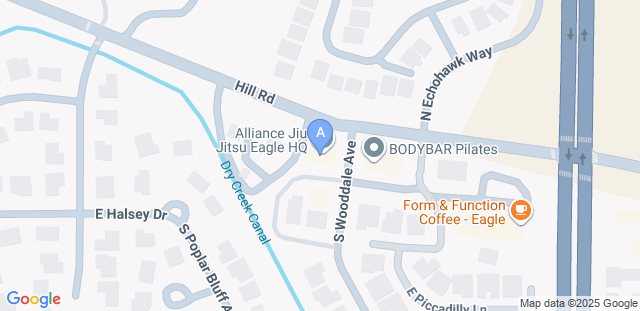
 Alliance JiuJitsu Eagle
Alliance Jiu-Jitsu Boise · Student Guide
Adult Belt Path
The Alliance Jiu-Jitsu graduation system — class requirements, stripe cadence, and how the belt exam works at Alliance Eagle and Alliance East Boise.
Book a Free Trial ClassOverview
A System Built On Honest Progress
At Alliance Jiu-Jitsu Boise , the graduation system defines clear, transparent requirements for every belt. Each level has a minimum total class count before a student is eligible to test, and a per-stripe class count that marks steady progress along the way. Completing those classes opens the door to the exam — passing the exam earns the promotion.
This structure is deliberate. It ensures that every belt awarded at Alliance Eagle and Alliance East Boise carries consistent meaning — here in Idaho and across all 340+ Alliance academies worldwide.
In Jiu-Jitsu, the belt is a result of the journey — not the goal. The numbers below are the floor, not the ceiling.
— Alliance Jiu-Jitsu methodology principle
| Belt | Total Classes to Test | Classes Per Stripe |
|---|---|---|
White
| 150 | 30 / stripe |
Blue
| 325 | 65 / stripe |
Purple
| 375 | 75 / stripe |
Brown
| 425 | 85 / stripe |
Black
| Follows IBJJF rules |
Class counts are cumulative from the start of the program. Stripes within each belt are earned at the intervals shown above.
How it Works
THE BELT EXAM
Once a student reaches the minimum class count for their current rank, the instructor assesses readiness and schedules the evaluation. The exam covers both technical knowledge and live application — and it is the same standard at Alliance Eagle and Alliance East Boise.
What The Exam Evaluates
Technique Demonstration — The student executes positions, escapes, sweeps, and submissions from the Alliance curriculum. The instructor evaluates understanding of mechanics, not just the ability to repeat a sequence.
Live Rolling (Sparring) — The student applies their knowledge under real pressure. Positional control, reaction to adversity, and overall game awareness are all assessed here.
Conduct & Character — How the student has shown up on the mat, treated training partners, and engaged with the academy community is part of the evaluation at every level. This is central to what Alliance stands for.
Important
Reaching the minimum class count makes a student eligible — it does not guarantee promotion. The exam result and the instructor's overall assessment determine the outcome. Stripes may be awarded between exams to mark ongoing progress.
A promotion at Alliance means something. That is by design. When you earn a belt at Alliance Eagle or East Boise, every other Alliance black belt in the world knows exactly what it took.
— Alliance Jiu-Jitsu Boise · Eagle & East Boise
The Adult Belts
What Each Belt Represents
White Belt — 150 Classes · 30 / Stripe
The starting point for every Alliance student. The white belt phase builds fundamental movement, positional awareness, basic escapes, and — most importantly — the training habit itself. Stripes come every 30 classes, providing clear, visible checkpoints along the way
Blue Belt — 325 Classes · 65 / Stripe
The first major milestone in Jiu-Jitsu. Alliance blue belts demonstrate functional BJJ: positional control, guard passing and retention, basic submission sequences, and the ability to apply technique under real resistance. The 325-class threshold ensures genuine, substantial mat time behind every evaluation.
Purple Belt — 375 Classes · 75 / Stripe
The transition from student to developing practitioner. A personal game begins to take shape — preferred guards, go-to submissions, strategic tendencies. Purple belts also contribute directly to academy culture and set a visible example for every newer student around them.
Brown Belt — 425 Classes · 85 / Stripe
Sustained excellence across all dimensions of the art. The technical foundation is complete; the personal game is well-developed. Brown belts assist with instruction, guide lower belts, and demonstrate the leadership and character that black belt demands.
Black Belt — IBJJF Rules Apply
In Jiu-Jitsu, the black belt is not a finish line — it is a new beginning. It represents the recognition that a practitioner can advance the art, teach it, and carry it forward with integrity. Black belt promotion follows IBJJF federation standards, including minimum age requirements (19 years) and time-in-rank criteria. The average dedicated practitioner reaches black belt after 8 to 12 years of consistent training.